01
Security Foundation
Identify security requirements, sensitive data, trust boundaries and potential attack paths before development begins.
- Threat Modeling
- Architecture Review
- Security Requirements

Secure applications, APIs, cloud environments, enterprise data and AI systems with cybersecurity engineering built into development and production.






Security by Design
Security works best when it is built into software from the beginning. We integrate security across architecture, development, testing, deployment and production so risks can be identified earlier and managed continuously.
01
Identify security requirements, sensitive data, trust boundaries and potential attack paths before development begins.
02
Integrate secure coding, application testing and automated security checks throughout software development.
03
Protect CI/CD pipelines, software dependencies, containers and cloud configurations before applications reach production.
04
Monitor vulnerabilities, validate remediation and strengthen security as applications, infrastructure and threats evolve.
What We Offer
Protect the applications, infrastructure, identities and data your business depends on through security engineering, continuous testing and risk-focused controls.
Secure Software & Applications
Service 01 / 10
Build security into web, mobile and enterprise applications throughout the software lifecycle.
Service 02 / 10
Integrate automated security controls into CI/CD, cloud infrastructure and software delivery without slowing engineering teams.
ExploreService 03 / 10
Protect enterprise APIs through secure authentication, authorization, testing and controlled access.
Service 04 / 10

Improve visibility and control across dependencies, open-source components, containers and build pipelines.
Enterprise Security & Resilience
Service 05 / 10

Protect cloud workloads, configurations, containers and hybrid environments across modern infrastructure.
ExploreService 06 / 10

Identify and validate exploitable weaknesses across applications, APIs, cloud and infrastructure.
Service 07 / 10

Protect workforce, machine and application access through identity controls, least privilege and continuous verification.
Service 08 / 10
Protect sensitive enterprise data through access controls, encryption, classification and governance.
ExploreService 09 / 10
Secure AI applications, models, enterprise data and autonomous agents across development and production.
ExploreService 10 / 10
Align cybersecurity controls with business risk, regulatory requirements and recognized security frameworks.
AI & Agent Security
AI applications and autonomous agents increasingly access enterprise data, APIs and business systems. Apply security controls around what they can access, use and execute.

Protect AI-enabled applications, APIs and integrations from vulnerabilities, unauthorized access and unintended data exposure.

Give AI agents governed identities with defined permissions, least-privilege access and clear control over the actions they can perform.

Protect sensitive prompts, enterprise knowledge, model interactions and retrieval data throughout the AI lifecycle.

Monitor agent activity, permissions, model interactions and security events to maintain oversight as AI systems operate in production.

Reduce risks from prompt injection, malicious inputs, data leakage and unsafe model responses across production AI applications.

Control which APIs, enterprise systems and business tools AI agents can access, and restrict high-risk actions through policy and approval controls.
Continuous Cyber Resilience
Cyber risk changes as applications, cloud environments and identities evolve. Build continuous visibility, validation and remediation into how enterprise security operates.

Identify exposed applications, APIs, cloud assets and infrastructure across changing enterprise environments.

Continuously discover, assess and track vulnerabilities instead of relying only on periodic security assessments.

Prioritize security issues based on exploitability, business impact and the importance of affected systems.

Validate security controls and remediation through testing, scanning and targeted penetration testing.

Monitor human, machine and AI identities to reduce excessive permissions and unauthorized access.

Connect findings with engineering teams and workflows so high-priority risks move quickly toward resolution.
Identify exposed applications, APIs, cloud assets and infrastructure across changing enterprise environments.
Continuously discover, assess and track vulnerabilities instead of relying only on periodic security assessments.
Prioritize security issues based on exploitability, business impact and the importance of affected systems.
Validate security controls and remediation through testing, scanning and targeted penetration testing.
Monitor human, machine and AI identities to reduce excessive permissions and unauthorized access.
Connect findings with engineering teams and workflows so high-priority risks move quickly toward resolution.
Case Studies
CASE STUDY 1 — GLOBAL CONSTRUCTION ENTERPRISE
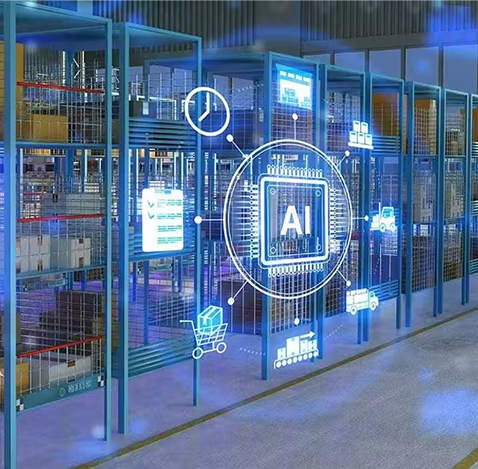
We built an AI-enabled solution to scan enterprise server images, extract text and automatically identify sensitive information including PII, Federal Contract Information and Controlled Unclassified Information.
PII / FCI / CUI
Data Detection
Azure OCR + AI
Automated Classification
Enterprise Data
Protection
CASE STUDY 2 — GLOBAL LIFE SCIENCES COMPANY
We developed blockchain-based identity management for a clinical trial application, enabling anonymous identity verification while protecting participant information and secure access to trial data.
Blockchain-Based
Identity
Anonymous
User Verification
Privacy-First
Data Access

CASE STUDY 3 — DIGITAL AGREEMENT PLATFORM
We developed a secure agreement platform using blockchain and smart contracts to protect confidential documents, record consent and maintain tamper-resistant transaction history.
Immutable
Records
Video-Based
Consent
Smart Contract
Security
CASE STUDY 4 — GLOBAL PRINTING & TECHNOLOGY COMPANY
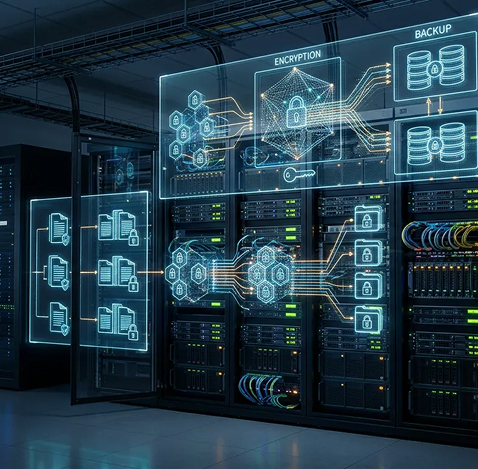
We developed a multi-user QR scanning solution with secure real-time data validation, encryption and controlled data exchange across connected printer environments.
Real-Time
Data Validation
Encrypted
Data Handling
Secure
Connected Access

Industries
Protect critical systems, sensitive data and digital operations with cybersecurity services aligned to the technology, regulatory and operational realities of each industry.
01
Patient Data & Digital Health Security
Protect healthcare applications, APIs, cloud environments and sensitive health data across connected digital ecosystems.
Explore Healthcare02
Financial Data & Transaction Security
Secure banking platforms, financial applications, APIs, identities and transaction environments against evolving cyber risk.
Explore Finance & Banking03
Customer Data & Commerce Security
Protect digital storefronts, customer information, payment workflows, APIs and connected commerce platforms.
Explore Retail & E-Commerce04
Connected Operations & Industrial Security
Strengthen security across enterprise applications, cloud infrastructure, connected systems and operational technology environments.
Explore Manufacturing05
Platform & Network Security
Protect logistics platforms, fleet systems, APIs, cloud infrastructure and data exchanged across distributed transportation networks.
Explore Logistics & Transportation06
Connected Vehicle & Mobility Security
Secure vehicle applications, connected platforms, APIs, cloud systems and digital mobility environments across the automotive ecosystem.
Explore Automotive07
Public System & Data Protection
Protect citizen-facing applications, sensitive information, digital services and public-sector technology environments.
Explore Government & Public Sector08
Digital Platform & Content Security
Secure streaming platforms, media applications, subscriber data, APIs and digital content ecosystems across connected channels.
Explore Media & EntertainmentSecurity & Governance
We follow internationally recognized security and governance standards to support secure software delivery, data protection and responsible AI practices across enterprise engagements.

Information Security Management. Demonstrates our commitment to managing information security through structured controls, risk management and continuous improvement.

AI Management System. Supports responsible AI governance with controls for AI risk management, oversight, transparency and accountability.

Quality Management System. Reinforces consistent delivery processes, quality management and continuous improvement across technology programs.
Why Programming.com

01
Bring cybersecurity and application engineering together rather than treating security as a separate final-stage activity.
02
Apply security throughout architecture, development, testing and production operations.
03
Protect modern technology environments spanning cloud workloads, sensitive data and AI-enabled applications.
04
Strengthen enterprise security without requiring unnecessary replacement of applications, infrastructure or business platforms.
05
Prioritize remediation around exploitable risk, business impact and the systems that matter most.
06
Integrate security controls, auditability and quality practices throughout technology delivery.
How We Secure

Map applications, infrastructure, identities, data and critical business assets to understand the current security posture.

Discover vulnerabilities, configuration gaps, access risks and security weaknesses across the environment.

Evaluate findings according to exploitability, exposure, business impact and remediation urgency.

Implement controls across applications, APIs, cloud, identity, data and development workflows.

Test remediation through security assessments, scanning, penetration testing and control verification.

Monitor changing risk and continuously strengthen security as systems, threats and business requirements evolve.
Cybersecurity Technology Ecosystem
We work with established application security, cloud, monitoring, vulnerability management and DevSecOps technologies to help secure enterprise software and infrastructure across development and production environments.












FAQ
Explore common questions about application security, DevSecOps, cloud security, VAPT, AI security and enterprise cyber risk.
Enterprise cybersecurity services help organizations identify, reduce and manage security risks across applications, APIs, cloud infrastructure, data, identities and other business-critical technology.
Programming.com supports application security, DevSecOps, API security, cloud and infrastructure security, vulnerability assessment and penetration testing, identity security, data protection, AI security and cyber risk management.
Application security focuses on protecting software from vulnerabilities throughout design, development, testing and production. It can include threat modeling, secure code review, SAST, DAST, API testing and penetration testing.
Explore Application Security Services →DevSecOps integrates security practices and automated controls into development and CI/CD pipelines so security testing happens continuously throughout software delivery.
Explore DevSecOps Services →Yes. Security assessments can identify and validate vulnerabilities across applications, APIs, cloud environments and infrastructure so remediation can be prioritized according to risk.
Cloud security can include identity and access controls, configuration assessment, workload security, container security, encryption, vulnerability management and monitoring across cloud and hybrid environments.
AI security can involve protecting model and retrieval data, securing APIs and execution environments, controlling agent permissions, managing non-human identities and monitoring how AI systems interact with enterprise tools and information.
Zero Trust is a security approach based on continuously verifying access rather than automatically trusting users or systems based on network location. It typically combines strong identity, least privilege and access policies.
Yes. Application security and DevSecOps practices can be integrated into existing development workflows through secure coding, automated testing, dependency scanning, CI/CD controls and security validation.
The process typically starts with understanding your critical systems, applications, data, current controls and business risks. From there, security priorities and the appropriate assessment, engineering and remediation approach can be defined.