01
Data Foundation
Prepare clean, relevant and governed data for model training and inference.

Build production-ready machine learning systems that turn enterprise data into predictions, automated decisions and measurable business outcomes.






Production ML
A model creates value only when it works inside real applications and decisions. We connect machine learning with enterprise systems, APIs and workflows so model outputs can be used in production.
01
Prepare clean, relevant and governed data for model training and inference.
02
Select and develop models around accuracy, latency and business requirements.
03
Expose models through APIs and connect them with applications and operational systems.
04
Monitor production behavior and use new data and feedback to improve model performance over time.
What We Offer
Build, integrate and operate machine learning systems around your business data, applications and real-world decision workflows.
Machine Learning Engineering
Service 01 / 08
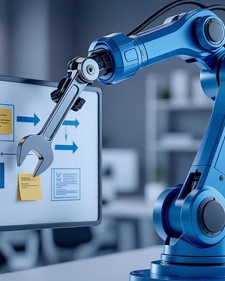
Identify high-value ML opportunities, assess data readiness and define the architecture, model strategy and implementation roadmap around clear business goals.
Service 02 / 08

Design, train and validate supervised, unsupervised and ensemble models around specific business problems, datasets and performance requirements.
Service 03 / 08

Design data pipelines, feature engineering workflows and governed datasets so models train and infer on clean, reliable enterprise data.
ExploreService 04 / 08

Connect machine learning models with enterprise applications, APIs and operational systems so predictions become part of everyday workflows.
Advanced Machine Learning
Service 05 / 08

Forecast demand, customer behavior, operational risk and future outcomes using historical and real-time enterprise data.
Service 06 / 08

Build neural network solutions for complex image, video, speech, language and sensor-data applications.
Service 07 / 08

Deploy, monitor and continuously improve machine learning models through governed, automated production pipelines.
Service 08 / 08
Improve accuracy, latency and cost by tuning features, architecture and inference so production models stay reliable as conditions change.

Intelligence at the Edge
Apply machine learning closer to manufacturing lines, vehicles and connected operations so predictions can be made where the data is generated.

Use machine learning for equipment monitoring, predictive maintenance and visual quality inspection closer to production environments.

Analyze vehicle, diagnostic and sensor data to support predictive insights and connected mobility experiences.

Process device and sensor data close to the source for faster operational intelligence.

Run image and video models closer to cameras and physical environments where real-time analysis is required.
Machine Learning Solutions
Apply ML where prediction, pattern recognition and data-driven decisions can improve business and operational outcomes.

Forecast demand, sales, capacity, customer behavior and operational requirements using historical and current data.

Use behavioral, transaction and contextual data to personalize products, content, offers and digital experiences.

Detect unusual patterns and emerging risks across financial, transactional and operational data.

Analyze images and video for recognition, inspection, classification, detection and visual intelligence.

Identify unexpected system, transaction, equipment or data behavior before it creates larger operational issues.

Use equipment and sensor data to identify patterns associated with failure, downtime and maintenance requirements.
Forecast demand, sales, capacity, customer behavior and operational requirements using historical and current data.
Use behavioral, transaction and contextual data to personalize products, content, offers and digital experiences.
Detect unusual patterns and emerging risks across financial, transactional and operational data.
Analyze images and video for recognition, inspection, classification, detection and visual intelligence.
Identify unexpected system, transaction, equipment or data behavior before it creates larger operational issues.
Use equipment and sensor data to identify patterns associated with failure, downtime and maintenance requirements.
Case Studies
CASE STUDY 1 — LOGISTICS TECHNOLOGY PLATFORM
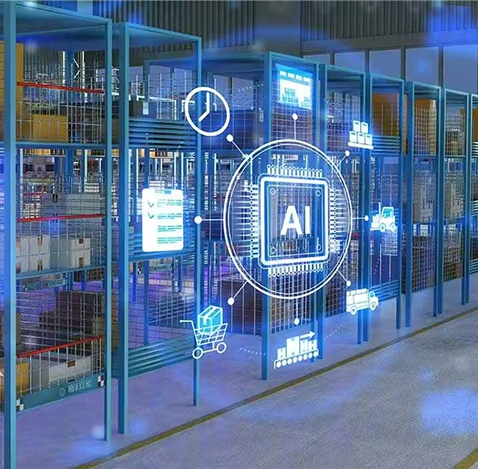
We developed machine learning capabilities for route optimization, demand forecasting, delivery-time prediction, capacity planning and inventory intelligence across logistics operations.
Predictive
Demand Forecasting
ML-Based
Delivery Prediction
AI-Driven
Route Optimization
CASE STUDY 2 — GLOBAL MANUFACTURING ENTERPRISE
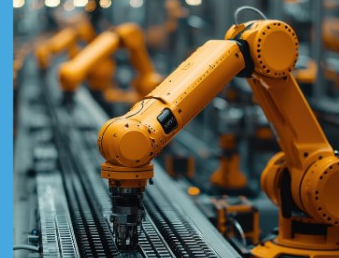
We built analytics capabilities that combine real-time manufacturing performance data with predictive maintenance insights to improve visibility into equipment health and operations.
Predictive
Maintenance
Real-Time
Equipment Monitoring
Connected
Operational Intelligence
CASE STUDY 3 — ENTERPRISE DATA PLATFORM
We developed an intelligent data-processing platform that automates ingestion, validation and analysis while using anomaly detection to improve data quality and reporting workflows.
80%
Less Manual Data Processing
AI-Based
Anomaly Detection
Real-Time
Data Monitoring

CASE STUDY 4 — CLOUD OPERATIONS PLATFORM
We implemented machine-learning and AI-driven monitoring capabilities to detect abnormal behavior, analyze incidents and support faster issue resolution.
50%+
Faster Issue Resolution
60–70%
Less Manual Effort
AI-Based
Anomaly Monitoring

Industries
Different industries generate different data and require different models. We build ML systems around the decisions and workflows that matter in each environment.
01
Predictive Health Intelligence
Apply machine learning to medical data, operational forecasting, patient intelligence and clinical support workflows.
Explore Healthcare & Life Sciences02
Risk & Fraud Intelligence
Build models for fraud detection, risk analysis, forecasting and customer intelligence.
Explore Finance & Banking03
Personalization & Demand
Improve recommendations, demand forecasting, customer segmentation and pricing decisions.
Explore Retail & E-Commerce04
Predictive Operations
Use equipment and production data for predictive maintenance, quality analysis and operational intelligence.
Explore Manufacturing05
Forecasting & Optimization
Apply ML to delivery prediction, demand forecasting, capacity planning and logistics intelligence.
Explore Logistics & Transportation06
Risk & Claims Intelligence
Use machine learning for risk modeling, fraud detection and claims analysis.
Explore Insurance07
Connected Vehicle Intelligence
Apply ML to diagnostics, predictive maintenance, sensor data and connected vehicle experiences.
Explore Automotive08
Network & Customer Intelligence
Use machine learning for churn prediction, anomaly detection and network performance analysis.
Explore TelecommunicationsWe partner with leading cloud providers to deliver scalable, secure, and performance-driven solutions tailored to your enterprise needs.

We use Cursor to support AI-assisted software engineering, improve developer productivity and accelerate modern application development.
We use Lovable to accelerate AI-assisted application development, rapid prototyping and the creation of modern digital products and enterprise applications.

We use Microsoft Azure to build, modernize and manage secure cloud, data and AI solutions for enterprise environments.

We work with AWS technologies to support cloud migration, application modernization, data platforms and AI-powered solutions.

We use Google Cloud capabilities across cloud infrastructure, data engineering, machine learning and enterprise application development.
We use Databricks to build modern data and AI platforms that support data engineering, analytics, machine learning and enterprise AI workloads.

Supports our commitment to quality management, consistent delivery processes and continuous service improvement.

As part of the Anthropic Claude Partner Network, we help enterprises explore and implement Claude-powered solutions, AI assistants and intelligent business workflows.
We use OpenAI models and technologies to build enterprise AI applications, copilots, knowledge assistants, automation workflows and custom Generative AI solutions.
We use Microsoft Azure to build, modernize and manage secure cloud, data and AI solutions for enterprise environments.
Demonstrates our approach to information security, data protection, risk management and secure technology delivery.
We work with AWS technologies to support cloud migration, application modernization, data platforms and AI-powered solutions.
We use Google Cloud capabilities across cloud infrastructure, data engineering, machine learning and enterprise application development.
As part of the Anthropic Claude Partner Network, we help enterprises explore and implement Claude-powered solutions, AI assistants and intelligent business workflows.
Supports quality-focused technology delivery for healthcare, medical-device and regulated business environments.
We use OpenAI models and technologies to build enterprise AI applications, copilots, knowledge assistants, automation workflows and custom Generative AI solutions.
We use Cursor to support AI-assisted software engineering, improve developer productivity and accelerate modern application development.
We use Lovable to accelerate AI-assisted application development, rapid prototyping and the creation of modern digital products and enterprise applications.
We use Microsoft Azure to build, modernize and manage secure cloud, data and AI solutions for enterprise environments.
Demonstrates our commitment to responsible AI management, governance, risk controls and continuous oversight of AI systems.
We use Databricks to build modern data and AI platforms that support data engineering, analytics, machine learning and enterprise AI workloads.
Why Programming.com

01
Start with the decision, workflow and measurable business problem before choosing the model or algorithm.
02
Bring data engineering, feature preparation and model development together through one team.
03
Design models around real applications, APIs, infrastructure and operational requirements from the beginning.
04
Deploy ML workloads across cloud, hybrid and edge environments based on latency, data and operational needs.
05
Build model monitoring, explainability and lifecycle controls into production systems.
06
Support ML initiatives from data preparation and model development through integration, deployment and continuous improvement.
How We Build

Define the business problem, users, data sources, decision points and measurable success criteria.

Assess, clean and structure data, engineer relevant features and establish the foundation required for model development.

Select the model approach, algorithms, features and architecture based on the problem and production requirements.

Train and tune models, evaluate performance and validate results against agreed business and technical metrics.

Connect trained models with enterprise applications, APIs and production infrastructure.

Track model behavior, drift and new data, then retrain or optimize models as requirements change.
Machine Learning Ecosystem
We use established ML frameworks, data platforms, cloud services and MLOps tools to build, deploy and manage machine learning systems across enterprise environments.


Blogs & Insights
 Design
How do you create compelling presentations that wow your colleagues and impress your managers?
Read More Product
How do you create compelling presentations that wow your colleagues and impress your managers?
Read More Software
How do you create compelling presentations that wow your colleagues and impress your managers?
Read MoreFAQ
Explore common questions about custom ML development, predictive analytics, deep learning, MLOps and production model deployment.
Machine learning development services cover the design, training, integration and deployment of models that learn patterns from data and use those patterns to generate predictions or support decisions.
A machine learning development company helps define ML use cases, prepare data, develop and validate models, integrate them with business applications and manage their performance after deployment.
We can build custom ML models for forecasting, recommendations, anomaly detection, fraud and risk analysis, computer vision, predictive maintenance and other data-driven business use cases.
Artificial intelligence is the broader field of building systems that perform tasks associated with intelligence. Machine learning is a branch of AI that uses data and algorithms to learn patterns and improve predictions without defining every rule manually.
Machine learning includes a broad range of statistical and algorithmic approaches. Deep learning uses multi-layer neural networks and is often applied to more complex image, video, speech, language and sensor-data problems.
Explore Deep Learning →The data depends on the business problem. Successful ML projects typically require relevant historical or real-time data that can be cleaned, structured, governed and evaluated for quality before model training.
Yes. Models can be exposed through APIs or integrated directly into enterprise applications, cloud platforms and workflows so predictions can be used inside existing business processes.
Predictive analytics uses historical and current data with statistical and machine-learning techniques to estimate future outcomes such as demand, risk, customer behavior or operational events.
MLOps brings engineering practices to the machine-learning lifecycle. It helps teams automate model deployment, versioning, monitoring and retraining so ML systems remain manageable and reliable in production.
Production monitoring can track model accuracy, latency, data changes, drift, errors and other operational metrics. Monitoring helps teams identify when model performance changes and when retraining or optimization may be required.